You Know Your Body Best
Early Detection Matters
Due to a family history of breast cancer, Anj Oto started regular mammogram screening at age 30. It was during one of her annual screenings that Anj received a diagnosis of Stage 1 breast cancer at age 33.
Her experience inspired Anj to share her cancer journey and encourage other women to be proactive in their healthcare, learn their family history, and stay up-to-date on recommended breast cancer screenings.
Watch her full story.
"How Early Screening Saved My Life"
View transcript
ERIC OTO: What made me fall in love with Anj? She's a beautiful person inside and outside.
ANJ OTO: Eric and I got married in 2020, and we had been trying to conceive for a couple of months when I went in for my annual mammogram. That mammogram led to two biopsies, and that was how I was diagnosed with breast cancer.
WENSHENG TRACY WU, NP: Andrea was diagnosed with early-stage breast cancer. It was hormone receptor positive and HER2 receptor positive, which is an aggressive subtype of breast cancer.
ANJ OTO: I have a family history of breast cancer. My maternal grandmother was diagnosed in her 60s. My mom was also diagnosed with breast cancer in her late 30s.
BETTY TAMAYO, ANJ's SISTER: I was very scared, knowing that our grandmother did die from breast cancer. It was very frightening to know that my baby sister was going to have to now go through the same journey.
DR. JAMI FUKUI: It's always hard to see situations like Anj has gone through. We really try hard to detect breast cancer early. Because of family history, there was already some understanding of what to expect. Unfortunately, we needed to give very aggressive treatment for a more aggressive type of breast cancer, which included not only surgery, but chemotherapy.
ANJ OTO: Going through chemo was the hardest thing I've ever done in my entire life. It impacted me so much physically, but also mentally, too. I honestly just felt really down and really depressed towards the end of chemo because it had just been week after week of dealing with these side effects.
ERIC OTO: It was super difficult to see someone you love and care for so much go through that. And what killed me was when I would see people there by themselves, without family, without friends. I couldn't imagine going through that without that support.
ANJ OTO: Just before my second-to-last chemo, I started an Instagram page where I shared some tips on how to navigate side effects, on what to bring with you to chemo, and that quickly morphed into a community of survivors, and thrivers, and previvors on social media.
DR. JAMI FUKUI: We really appreciate Anj sharing her story. It's a very brave thing to do, and it opens up so many doors for other people who are going through the similar thing.
BETTY TAMAYO: As we were discussing the course of her treatment and when she was nearing the end, we talked about different ways of celebrating.
ANJ OTO: So a lot of people in cancer clinics around the world, when they complete treatment, they will ring a bell.
BETTY TAMAYO: As she exited from her last treatment, we were able to present her the bell that I donated to the cancer center.
[Anj rings bell as providers and friends cheer.]
DR. JAMI FUKUI: After all these treatments that she received, she is now cancer-free.
ANJ OTO: I can't imagine going through treatment and getting care anywhere else. I truly believe that I have the best care team in the universe.
DR. JAMI FUKUI: Anj's story really helps to showcase how important it is to have early detection and screening, and sometimes in a high-risk program. It's important to understand your health, your family history, and really tailor treatments and management according to that.
ANJ OTO: I truly believe that early detection saved my life. If it were not for that mammogram at Kapiʻolani, I don't know where I would be today, but it certainly would not be where I am right now.
Schedule your mammogram today.
As a third-generation breast cancer survivor, Anj Oto stresses the importance of knowing your family health history and early health screenings.
Ready to Know More?
Anj's family history led her to begin screening earlier than many women. But for most women, it's recommended to begin annual mammograms at age 40.
A mammogram gives you valuable information about your breast health and can find changes before you can see or feel them. Most breast changes aren’t cancer. But if something is found, catching it early can help you get the care you need sooner.
Talk with your provider about the screening schedule that's right for you. Because when it comes to taking care of your breast health, knowledge is one of your best defenses.
Mammogram FAQs
/
What happens during a mammogram?
This is my first mammogram – what can I expect during my appointment?
Your first mammogram may feel a little stressful, but knowing what will happen can help you feel more at ease.
During the mammogram, you and the technologist will be the only people in the room. Before the exam begins, tell the technologist about any breast changes or concerns and if you have implants, trouble standing or staying still, are breastfeeding, or if you are possibly pregnant.
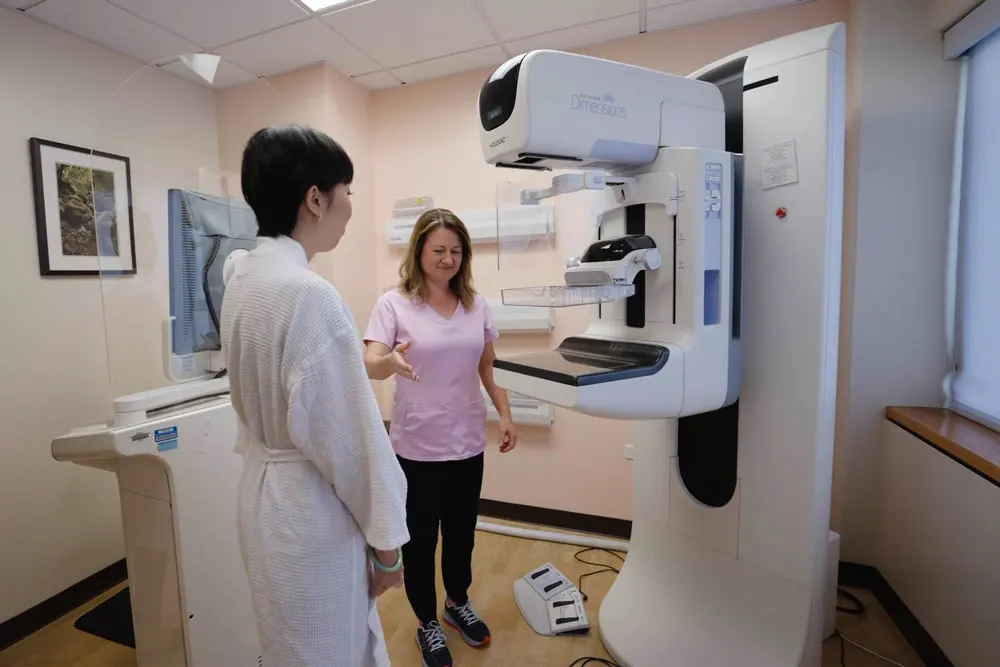
For the exam, you’ll stand in front of the mammogram machine while the technologist places one breast at a time between two plates. The plates compress the breast for about 10-15 seconds to take clear X-ray images from different angles.
The pressure may feel uncomfortable, and you will be asked to hold your breath for a few seconds at a time. Let the technologist know how you feel so they can help make you as comfortable as possible.
Most screening mammograms include two images of each breast. More images may be needed if you have breast implants or larger breasts.
How can I prepare?
Is there anything I need to do to prepare for a mammogram?
A few simple steps can help your mammogram go smoothly and support clear images. Here’s how to prepare.
Choose an imaging facility that specializes in mammograms and somewhere you can return to each year so your images are easy to compare. If your breasts are often tender, try to schedule your visit about a week after your period. Our online scheduler makes finding a time and location that works best for you quick and convenient.
On the day of your appointment, wear a comfortable two-piece outfit so you can easily remove your top and bra for the exam. You’ll be given a gown to wear and can store your belongings in a locker.
Do not apply deodorant, antiperspirant, powder, lotion, cream, or perfume under your arms or on your breasts, since these products can appear as white spots on the images. Leave necklaces and long earrings at home.
You may eat and drink as usual and take your daily medications.
Bring a photo ID, your insurance card, and any forms from your healthcare provider. If you have questions about coverage, contact your insurance company before your visit.
Our screening exams also include intake questions to assess your personal breast cancer risk, so knowing your personal or family history in advance of your exam can help get a more accurate assessment.
What are my options if I'm younger than 40?
I’m too young for a mammogram but I want to be proactive about my health. What are my options?
Your breasts can change throughout your life, and getting to know what is normal for you can help you notice changes early. Most changes are not a concern, but if something looks or feels different (you notice skin changes or thickening; skin or nipple dimpling or puckering; or develop a lump or an unexplained rash in your breast, chest, armpit, or neck), reach out to your healthcare provider for guidance and peace of mind.
If you have a family history or other risk factors, our high-risk breast program and genetic counseling services can help guide screening and prevention strategies for you and your family.
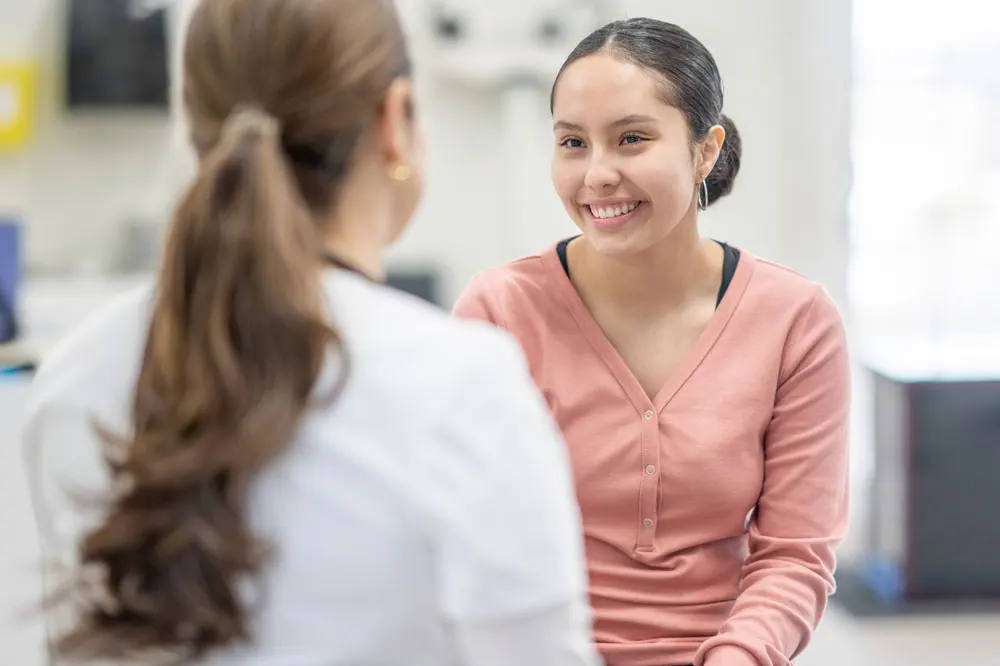
Different types of mammograms?
What types of screening mammograms do you offer?
Our imaging facilities offer 3D mammography (tomosynthesis). Considered the gold standard imaging procedure for breast cancer screenings, this type of advanced digital mammogram detects cancer more accurately than older X-ray analog mammograms, especially in dense breast tissue. It’s known as a 3D mammogram because it uses a series of two-dimensional images to build a three-dimensional image of your breast.
We also offer traditional 2D mammograms.
How long before I get my results?
How long will I have to wait before getting my results?
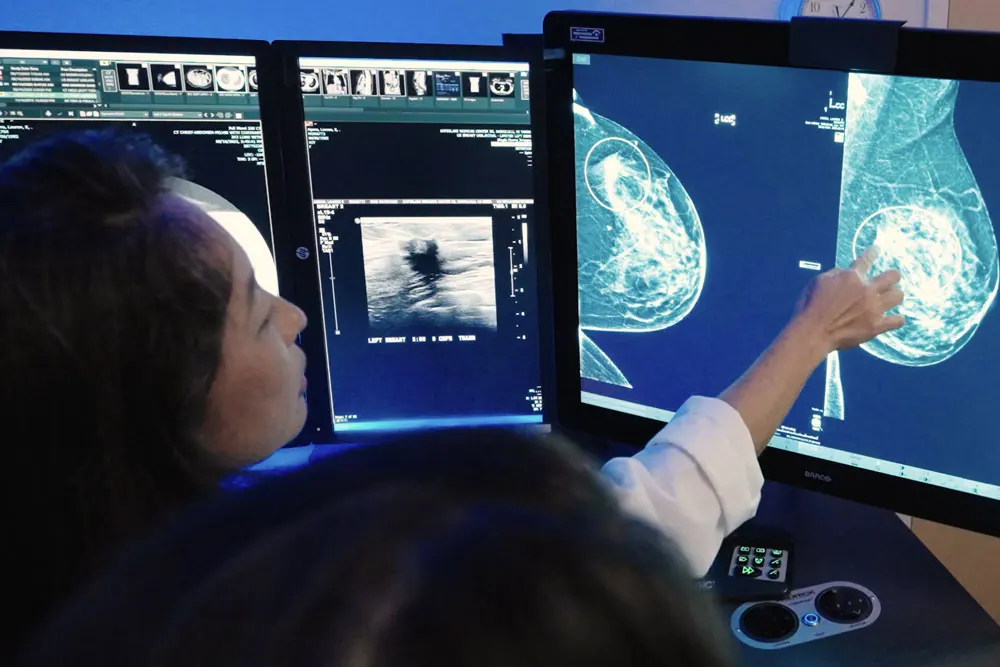
After a radiologist carefully reviews your mammogram for any signs of breast cancer, they will send a report to your healthcare provider. You’ll also receive an easy-to-understand summary of your results by mail or through your MyChart.
You will usually get your mammogram results within a week of your exam, although this can vary.
What if my results are abnormal?
I got an abnormal result. What does this mean, and what do I do next?
An abnormal result doesn’t always mean breast cancer. It means the radiologist saw an area that needs a closer look, so you may need additional mammogram images and/or an ultrasound.
If your results are abnormal, your healthcare provider will explain what they mean and guide you through the next steps.
If further testing shows breast cancer, our care teams at Hawaiʻi Pacific Health can explain what it means and help you understand your treatment options.
Wherever you are in your journey, trusted information can help you and your loved ones move forward with hope. Learn more about breast cancer and treatment options available at our Hawaiʻi Pacific Health Cancer Centers.
What is dense breast tissue?
What does it mean if my results show I have dense breast tissue?
Breast density describes how much fibroglandular tissue (connective tissue, milks ducts, and lobules) you have compared with fatty tissue.
Almost 50% of women have dense breast tissue. While not abnormal, having dense breast tissue is considered a risk factor for breast cancer because both dense tissue and cancerous growths appear white on mammograms, making it harder to detect breast cancer.
Watch this short video to learn what having dense breast tissue means and why annual screening mammograms are especially important.
View transcript
What is breast density?
Breast density is not based on breast firmness, size, or shape.
Breast density is another way to describe how much tissue and fat are in a woman's breast. Breasts are mostly made up of breast tissue, fat, and connective tissue.
High breast density means breasts have more tissue than fat.
On the other hand, low breast density means breasts have more fat than tissue.
Do certain things increase your chances of having dense breast tissue?
Yes. Age, genetics, pregnancy, body weight and the number of children a woman has given birth to are all factors.
Dense breast tissue is normal.
In fact, about 40% of women aged 40 and older have dense breasts, with another 10% who are said to have extremely dense breasts.
Asian women are nearly 2/3 more likely to have sense breast tissue, so it's very common in Hawaiʻi.
So what's the big deal with dense breast tissue?
Dense breast tissues show up white on a mammogram. Cancer tumors are also white, making it hard to tell the difference.
Women with very dense breasts are four to five times more likely to develop breast cancer than women with low breast density.
Only a mammogram can show if a woman has dense breast tissue.
If a recent screening shows that a woman has dense breast tissue, it is important for her to know that so that she can understand that it increases her chances of breast cancer going undetected.
There's even a law for that.
The Dense Breast Law requires that imaging centers notify women if they have dense breast tissue.
These results are included with a recommendation to discuss additional imaging options.
If you have any questions or concerns be sure to speak with your primary care provider.
What does it mean when you hear you have dense breast tissue? And why is having dense breasts considered a risk factor for breast cancer?
This animated video answers these questions and explains why screening mammograms are especially important for women with dense breast tissue.
Where are you located?
I'd like to get a mammogram but don't know where to go.
We offer mammogram screenings at convenient locations across Oʻahu and at the Wilcox Women's Center on Kauaʻi. Select one of our locations below to learn more.


Schedule a Mammogram Today
You may also schedule your mammogram in MyChart.
If you are not already enrolled, sign up for MyChart.
Reminders
- Please bring a picture ID and your insurance card(s) with you on the day of your appointment.
- Be sure to bring any additional documents provided to you by your physician.
- If you have any questions regarding your insurance coverage, contact your insurance company directly.
Hawaiʻi Pacific Health is proud to be the first health system in Hawaiʻi to have earned the Integrated Network Cancer Program accreditation from the Commission on Cancer.