Cardiac Rehabilitation
Stay connected to your care with MyChart® by Hawai‘i Pacific Health – message your provider, view test results, complete forms, and more.
Service Overview
Cardiac rehabilitation is a supervised exercise program that improves the cardiovascular health for people with recent procedures or conditions.
People who are part of this program are:
- Less likely to experience complications and sudden death
- Less likely to be readmitted to a hospital following a heart attack, heart failure, angioplasty or heart surgery
- Expected to have improved quality of life and exercise performance
- Subject to fewer symptoms such as chest pain, fatigue, shortness of breath and psychological distress
Conditions & Treatments
You may be helped by cardiac rehab if you have certain heart conditions or if you have had certain heart procedures. These include:
- Stable angina. This is chest pain caused by disease in the arteries of your heart.
- Heart attack (myocardial infarction). A heart attack happens when the heart muscle itself doesn’t get enough blood.
- Heart failure. This means your heart can't pump blood as well as it should. Your body then does not get enough blood.
- Coronary artery bypass grafting (CABG) surgery. This is surgery to bypass blocked arteries in the heart. It uses an artery or vein to go around the blocked vessel.
- Heart valve repair or replacement. This is surgery to fix or replace 1 of your heart valves. The valves keep blood flowing in 1 direction in your heart.
- Heart or heart-lung transplant. This is surgery to replace a damaged heart or heart and lungs.
- Angioplasty with or without a stent. This is done to fix an artery in your heart. The cardiologist may put a small mesh tube (stent) inside the artery to help keep it open.
- Peripheral artery disease. This means the arteries that send blood to your arms and legs or other organs are narrowed.
Patient Resources
What is cardiac rehabilitation?
Who can be helped by cardiac rehab?
Cardiac rehab may help you if you have certain conditions or you have had certain procedures. These include:
- Stable angina. This is chest pain caused by disease in the arteries of your heart.
- Heart attack (myocardial infarction). A heart attack happens when the heart muscle itself doesn’t get enough blood.
- Heart failure. This means your heart can't pump blood as well as it should. Your body then does not get enough blood.
- Coronary artery bypass grafting (CABG) surgery. This is surgery to bypass blocked arteries in the heart. It uses an artery or vein to go around the blocked vessel.
- Heart valve repair or replacement. This is surgery to fix or replace 1 of your heart valves. The valves keep blood flowing in 1 direction in your heart.
- Heart or heart-lung transplant. This is surgery to replace a damaged heart or heart and lungs.
- Angioplasty with or without a stent. This is done to fix an artery in your heart. The cardiologist may put a small mesh tube (stent) inside the artery to help keep it open.
- Peripheral artery disease. This means the arteries that send blood to your arms and legs or other organs are narrowed.
The cardiac rehab team
Your cardiac rehab program may start while you are in the hospital or soon after you are discharged. Many different healthcare providers may help with your cardiac rehab. They include:
- Specialists. This team may include an expert in diagnosing and treating heart disease (cardiologist), a heart surgeon (cardiovascular or cardiothoracic surgeon), and rehabilitation specialist (physiatrist).
- Primary care providers. These include a specialist in caring for adults (internist) and a healthcare provider who cares for all family members (family practice provider).
- Cardiac nurses. These are nurses who have special training in caring for people with heart problems.
- Registered dietitian or nutritionist. This person has special training in healthy eating and in diets for people with heart and other health conditions.
- Physical therapist. This specialist is trained to help improve how you move to ease your pain and disability as well as improve your ability to function.
- Occupational therapist. This specialist is trained to help improve how well you can do your daily tasks.
- Psychologist, psychiatrist, or counselor. This person helps with mental health problems. They can help you cope with daily stress, including long-term health problems.
- Case manager or social worker. This person helps with planning your care. It may be in the hospital, in long-term care, or at home.
Other healthcare providers may also be involved. It depends on your needs and your program.
The cardiac rehab program
Your cardiac rehab program is designed to meet your needs. It's overseen by a cardiologist (cardiac specialist) and a team of cardiac health providers. Your program may last from 6 weeks to more than a year.
The goal of cardiac rehab is to help ease your symptoms and make your heart as healthy as possible. Your program may include:
- Exercise program. This makes you more fit and helps your heart work better.
- Classes to help you change your lifestyle and habits. For example, classes and support to help you quit smoking. Or you may take a nutrition class to learn how to eat better.
- Stress management. You will learn how to manage stress to lower your anxiety.
- Counseling. This will help you learn about your specific condition and how to live with it.
- Occupational therapy. This is to help you get ready to go back to work or to manage normal activities of daily living.
Care at Kapiʻolani
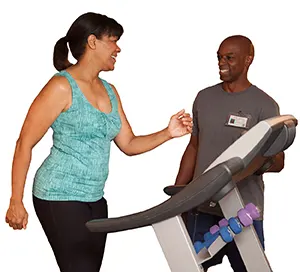
Cardiac rehab is personalized to an individual's ability. We offer low-impact aerobic exercise and strength training. You can expect to learn everything you will need to continue the lifestyle changes your condition requires.
Ask your primary care physician (PCP) or heart specialist to find out if you are eligible for cardiac rehab.
Care at Pali Momi
Cardiac rehab is personalized to an individual's ability. We offer low-impact aerobic exercise and strength training. You can expect to learn everything you will need to continue the lifestyle changes your condition requires.
Ask your primary care physician (PCP) or heart specialist to find out if you are eligible for cardiac rehab.
Care at Straub Benioff
Return to an active life while improving overall health with the Straub Benioff Cardiac Rehabilitation. This 12- to 36-week program is is personalized to an individual's ability. We offer low-impact aerobic exercise and strength training.
You can expect to learn everything you will need to continue the lifestyle changes your condition requires.
Ask your primary care physician (PCP) or heart specialist to find out if you are eligible for cardiac rehab.
Care at Wilcox
Heart disease is the leading cause of death in Hawaiʻi and the U.S.
The CDC, National Institutes of Health and the American Heart Association recommend a cardiac rehabilitation program to:
- Reduce mortality
- Lessen the chance of another heart attack
- Increase a person’s quality of life
Rehabilitation at Wilcox
Wilcox's cardiac rehabilitation program is 12-36 weeks and focuses on low-impact aerobic exercises and strength training. Each exercise-based treatment program is personalized to a participant’s ability.
Participants come into the clinic for an hour, once or twice a week. Exercise equipment supports all levels of fitness. We monitor vital signs and cardiovascular health with the latest software and tools.
Educational information which may include:
- Diabetes
- Heart Failure
- Nutrition
- Managing medications
- Lifestyle modifications