Hawai‘i Pacific Health Cancer Centers (Oncology)
Service Overview
Hawai‘i Pacific Health Cancer Centers offer comprehensive and compassionate cancer care from prevention and screenings through diagnosis, treatment, support and survivorship. Our multidisciplinary specialized care teams are dedicated to treating specific types of cancer with the latest options in medical, radiation, surgical oncology, infusion services and specialty pharmacy, including chemotherapy, biotherapy, immunotherapy, targeted therapy, endocrine and infusion therapy as well as access to clinical trials here in Hawaiʻi.
Our nationally recognized, highly trained doctors, advanced practice providers and staff are committed to providing top-quality, comprehensive and well-coordinated cancer care for adults and children.
We want patients to benefit from the latest medical breakthroughs, so we participate in research and clinical trials. Our specialized cancer care means that patients can be treated close to home in Hawaiʻi, near their network of family and friends.
We know that dealing with cancer is more than a medical issue. Our support programs help patients and families cope with the challenges of both the disease and the treatment.
We are dedicated to providing you with the highest-quality expert care in a safe, comfortable and caring environment.
We have four main centers – Kapiʻolani Medical Center for Women & Children, Pali Momi Medical Center, and Straub Benioff Medical Center on Oʻahu and Wilcox Medical Center on Kauaʻi.
Although your insurance may not require a referral, our oncology team wants to ensure that you’ve had necessary diagnostic tests before seeing you in clinic. Please have your one of your doctors initiate a referral to us. Depending upon your insurance carrier, you may or may not need a referral from your primary care physician (PCP). Please check with your PCP or your insurance company.
We treat a variety of cancer, pre-cancer, and benign (non-cancer) conditions for infants and toddlers all the way through to adults. See a full list of the services we can provide.
Yes! Please have one of your doctors initiate a referral to us. If you would like to speak with someone about our Hawaiʻi Pacific Health Cancer Centers, please contact us.
General Conditions & Treatments
Your cancer treatment may involve several types of health care professionals who, with you, form the cancer care team. The multidisciplinary cancer care teams at Hawaiʻi Pacific Health Cancer Centers include:
Physicians
Oncologists are doctors who specialize in the diagnosis and treatment of cancers through chemotherapy, targeted therapies and other treatments such as surgery or radiation. They are the ones who will manage cancer treatment and coordinate with other members of treatment team.
Navigators
Finding your way through the health care system can be challenging and overwhelming, especially when faced with a cancer diagnosis. At Hawaiʻi Pacific Health, we believe that you should not have to face this journey alone.
Our dedicated team of patient navigators includes registered nurses, licensed social workers and certified mammography technologists. These specialized professionals provide individualized education and resources to ensure that you and your loved ones are cared for and supported throughout your cancer journey.
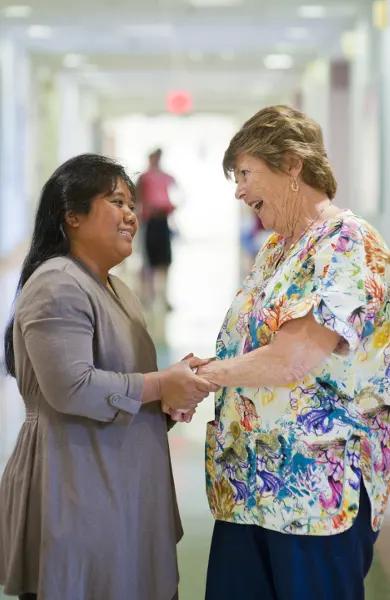
Depending on your individual needs, your navigators may offer some of the following services/resources:
- Coordination of care alongside your physician and your health care team.
- Educational materials and resources regarding your diagnosis and treatment.
- Information about and access to clinical trials, genetic counseling, dietary counseling and psychosocial support.
- Referrals to support groups, homecare services or other supportive services.
- Referrals to programs like American Cancer Society ACS Cares, Road to Recovery, and Look Good Feel Better)
- Resources for wigs and head coverings or prosthetics
- Resources for transportation or lodging assistance and financial concerns.
Transition of care into our Survivorship Program.
Cancer survivors face long-term challenges from both the disease and its treatment.
Cancer care doesn’t end when treatment is done. Survivors live with increased risk for a recurrence or development of a new type of cancer. Survivors may also have concerns about long-term emotional issues, physical limitations or cognitive changes.
The transition from active treatment to survivorship presents an opportunity to assist the patient in achieving optimal long-term health. Hawaiʻi Pacific Health’s cancer navigation and survivorship programs employ specialists who support patients throughout the cancer continuum.
Available services include:
- Professional navigators, who help support patients during cancer treatment.
- Massage therapy.
- Aromatherapy.
- Support groups.
- Dietitian services to help with nutrition.
- Referrals to exercise programs.
- Advanced practice providers who help patients develop a road map for long-term monitoring and recommendations to reduce likelihood of cancer coming back.
For more information, please contact:
Kapi‘olani Women’s Center at Artesian Plaza: 808-949-3444
Kapi‘olani Women’s Cancer Center: 808-983-6090
Pali Momi Medical Center: 808-485-3122
Straub Benioff Medical Center: 808-522-4333
Wilcox Medical Center: 808-245-1547

Palliative care is a form of specialized medical care that involves specially trained doctors, nurses and other specialists – social workers, case managers, pharmacists, chaplains – whose main focus is providing an extra layer of support to patients and families. The palliative care team offers relief from symptoms, assists with making medical decisions, and provides education, advance care planning and emotional support.
To learn more, visit our Palliative Care page.
The side effects of cancer treatment often include decreased appetite, weight loss or gain, chewing and swallowing challenges, nausea and food aversions. A certified dietitian or nutritionist can help patients adjust their eating and hydration needs and can answer questions related to maintaining a healthy, balanced diet.

Staying connected with other people who are going through a similar situation can offer hope and reassurance during this uncertain time. Led by social workers, regular support group meetings are available to cancer patients, cancer survivors, family members, caregivers and those who have lost a loved one.
Visit our Support Groups page.

High-risk breast specialists help women who are at an increased risk of developing breast cancer. They provide services such as breast imaging, genetic testing, nutritional counseling and more.
Pediatric Conditions & Treatments
Pediatric cancer is a term for cancers that occur in children ages 0-14+ years. The major types of pediatric, or childhood, cancers include acute lymphocytic leukemia (ALL), brain and other central nervous system (CNS) tumors, and neuroblastoma, a type of cancer that forms from immature nerve cells.
Children’s cancers can differ greatly from those found in adults, so children who have cancer most often will be treated at a children’s hospital such as Kapiʻolani. Here, doctors and other health care professionals who have undergone special training provide the care and expertise required for treating pediatric cancer.
- Bone marrow transplant
- Bone tumors
- Brain tumors
- Cell therapy
- Chemotherapy
- Kidney tumors
- Leukemia
- Lymphoma
- Neuroblastoma
- Radiation therapy
- Surgery
Patient Resources
Cancer is not just one disease. Rather, it’s a group of diseases, all of which cause cells in the body to change and grow out of control. Cancers are classified by the type of fluid or tissue it originates from, or the location in the body where it first started.
The Hawaiʻi Pacific Health Cancer Centers are unique in that we treat the full spectrum of cancers that afflict all ages — from the earliest onset cancers in children to cancers that develop later in adulthood. Our teams specialize in treating specific types of cancers, ensuring treatment decisions are based on the most current evidence.
Breast cancer is the second leading cause of cancer-related death among women in Hawaiʻi and the United States. Though some people are at a higher risk than others for developing breast cancer, the majority of women who are diagnosed with breast cancer don’t fall into specific high-risk categories or have a family history of breast cancer.
Breast cancer screening, with mammography, has been proven to save lives. It is important to have an annual screening beginning at age 40, or sooner if the person is at an elevated risk. It’s also important to be aware of changes in your body and alert your doctor, even if you’re not old enough for screening. Symptoms include: lump in breast, chest, armpit or neck, skin changes or thickening, skin or nipple dimpling or puckering, and unexplained rash. If any of these things persist or get worse, notify your doctor for evaluation. Breast cancer can be treated effectively when caught early.
- Breast biopsy
- Breast imaging (mammogram)
- Breast surgery
- Hidden scar breast cancer surgery
- Magnetic guide implant – tumor removal
- Breast cancer treatment options
- Radiation oncology
- Reconstructive breast surgery
Lung cancer is the leading cause of cancer death in Hawaiʻi, the United States and worldwide. In its early stages, lung cancer usually has no symptoms. Only after the tumor begins to grow will a person begin to exhibit signs that something is wrong, such as a nagging cough that continues to get worse or constant chest pain. Other symptoms can include shortness of breath, wheezing, recurring lung infections (e.g., pneumonia or bronchitis), bloody or rust-colored sputum, hoarseness, or fever for unknown reason. Lung cancer can be treated effectively when caught in its early stages.
While smoking is the leading cause of lung cancer, other risk factors may increase a person’s chances of developing the disease, including second-hand smoke, radon or asbestos exposure, air pollution, and personal or family history of lung cancer.
Only a doctor can tell whether symptoms are caused by cancer or by another problem. Consult your primary care physician for a diagnosis.
- Chemotherapy
- Low-dose CT lung screening
- Lung cancer prevention and treatment
- Mesothelioma
- Radiation
- Non-small cell lung
- Small cell lung
- Surgery
Gastrointestinal (GI) cancer refers to a group of cancers that affect the digestive system. This includes cancers of the esophagus, liver, pancreas, stomach, small intestine, colon and rectum. Most GI cancers are diagnosed at an advanced stage because there are no early signs or symptoms of a problem, or there are no screening options available.
Colorectal cancer, which includes cancers of the colon and rectum, is the fourth most common form of cancer in the United States and the second leading cause of cancer death in the U.S. Most people with early colon cancer don't have symptoms. Instead, these "silent" tumors grow slowly and often won’t produce symptoms until they reach a large size.
Fortunately, colorectal cancer is preventable and can be curable, with proper screening. Discuss your risk factors for colorectal or other GI cancers and prevention options with your primary care physician.
- Chemotherapy
- Colon
- Liver
- Pancreatic
- Radiation
- Rectal
- Surgery
Bladder, kidney, prostate and testicular cancers are all considered urological. All are relatively common and treatable if detected early. At Hawaiʻi Pacific Health, our patients have access to state-of-the-art urologic oncology programs, specialists and research.
Prostate cancer usually develops slowly and remains in the prostate, where it may not cause any serious damage. Prostate cancer that is more advanced, however, may cause difficulty urinating, incontinence, blood in the semen, pain or discomfort in the pelvic area, bone pain or erectile dysfunction.
Bladder cancer is often found early, when it is most treatable. Symptoms may include blood in the urine, painful urination, increased frequency in urination, pelvic or flank pain, discharge from the urethra, or enlarged lymph nodes in the groin area.
Kidney cancer, also referred to as renal cancer, begins in the kidneys and often doesn’t cause any signs or symptoms. When symptoms do occur, they may include blood in the urine, pain in the lower back, loss of appetite, fatigue, swelling of ankles and legs, high blood pressure, anemia, recurrent fever or rapid, unexplained weight loss.
Testicular cancer is more common in younger men but can occur at any age. Testicular cancer is highly treatable and curable, which is why men are encouraged to perform monthly testicular self-exams.
- Prostate cancer
- Bladder cancer
- Kidney cancer
- Testicular cancer
- Diagnosis and treatment
Gynecologic cancers include cervical cancer, ovarian cancer, uterine/endometrial cancer, vaginal cancer and vulvar cancer.
Symptoms of gynecologic cancers are subtle and may include bloating, pelvic or abdominal pain, difficulty eating or feeling full quickly, or a change in urinary urgency or frequency.
Cervical cancer screening should start in early adulthood. Cervical cancer can be effectively treated when caught early.
Women who have these symptoms almost daily for more than a few weeks should see their primary care physician or gynecologist. Prompt medical evaluation may lead to early detection, when cancer is in its early stages and most curable.
- Cervical
- Cervical screening
- Chemotherapy
- Endometrial
- Ovarian
- Radiation
- Surgery
- Uterine
- Vaccine – HPV
- Vaginal
Hematology refers to the care and treatment of blood cancers, which can affect the cells that make up the blood, bone marrow and lymphatic system. While rare, blood cancers can occur in both children and adults and include leukemia, myeloma and lymphoma.
Leukemia is a cancer of the blood cells (usually white blood cells) and develops in the bone marrow. It is the most common form of pediatric cancer.
Myeloma also is a cancer that begins in the white blood cells, but this form of cancer affects what are known as plasma cells, which make proteins that help the body fight off disease.
Lymphoma affects the cells of the body's disease-fighting network, known as the lymphatic system. This includes the lymph nodes, spleen, thymus gland and bone marrow. The main types of lymphoma are Hodgkin lymphoma and non-Hodgkin lymphoma.
- Biotherapy
- Cell therapy
- Chemotherapy
- Leukemia
- Lymphoma
- Myeloma
Skin cancers are the most common type of cancer in the world, accounting for approximately 75% of all cancer diagnoses.
The main cause of skin cancer is overexposure to sunlight, which contains ultraviolet (UV) rays that can alter the genetic material in skin cells. Sun lamps and tanning beds also generate UV rays that can damage skin and cause skin cancers. The best skin cancer prevention is proper sun protection, including wearing long sleeves or pants, hats, sunglasses, and using at least SPF 30 daily on sun-exposed body parts.
Skin cancer is about three times more common in men than in women. Most people are diagnosed between the ages of 45 and 54; however, the incidence of skin cancer is rising, especially among young people.
- Basal cell
- Chemotherapy/Biotherapy
- Melanoma
- Squamous cell
- Surgery
Care at Kapiʻolani
The Kapiʻolani Women's Cancer Center is dedicated to the prevention and treatment of breast cancers and gynecologic cancers, including ovarian, endometrial, cervical, vulval and vaginal cancers. With the only center of its kind in the state, Kapiʻolani strives to provide the highest level of women's cancer care in Hawaiʻi, where a woman's support network of family and friends can be an integral part of the treatment and healing process. In addition, the center offers patients the opportunity to participate in state-of-the-art clinical trials in collaboration with the University of Hawaiʻi Cancer Center and the National Cancer Institute.
- Evaluation and treatment of gynecologic cancers and pre-cancerous conditions, including ovarian and pelvic masses and cervical lesions.
- Outpatient cervical dysplasia treatment, LEEP, colposcopy, biopsy and cryotherapy.
- Complex gynecologic surgery for pelvic, gynecologic and malignant conditions.
- Laparoscopy
- Systemic therapy, including chemotherapy, immunotherapy, targeted therapy, endocrine therapy, hydration and blood products.
- Access to the Hawaiʻi Pacific Health specialty pharmacy.
- Research protocol availability, eligibility assessment, enrollment and monitoring.
- Evaluation and treatment of breast cancers and non-malignant breast conditions.
- Breast surgery and reconstruction consultations.
- Medical oncology consultation and treatment.
- Systemic therapy, including chemotherapy, immunotherapy, targeted therapy, endocrine therapy, hydration and blood products.
- Access to the Hawaiʻi Pacific Health specialty pharmacy.
- Research protocol availability, eligibility assessment, enrollment and monitoring.
- Cancer risk assessment.
- Genetic counseling and testing, when appropriate, for a variety of hereditary cancers.
- Personalized care plans, including cancer surveillance and/or risk-reducing surgeries and therapies.
Services available at the center or by referral:
- Acupuncture
- Massage
- Nutritional or dietary counseling
- Psychological counseling
- Support groups
Kapi‘olani Women’s Cancer Center: 808-983-6090
According to the National Cancer Institute (NCI), children's survival rates are 20-40% better when their care is coordinated by a pediatric oncologist and treatment is received at a comprehensive, multidisciplinary cancer center.
As a member of the NCI-sponsored Children's Oncology Group, Kapiʻolani's Comprehensive Children's Cancer Center offers institute-standard specialized care in Hawaiʻi, allowing families to receive treatment locally rather than traveling to the mainland. Our team includes pediatric oncologists, pediatric surgeons, specialty surgeons (such as neurosurgeons and urologic surgeons), radiation oncologists, pathologists, pediatric oncology-certified nurses, other pediatric specialists, psychiatrists, oncology social workers, nutritionists and home health care professionals. All have experience and expertise in treating children and adolescents with cancer.
When children were diagnosed with cancer 40 years ago, only about 30% survived. Today, more than 75% of children diagnosed with cancer are able to overcome the disease, in great part due to clinical trials. These research studies represent the latest cancer treatments available in the country.
- Kapi‘olani has more than 95 clinical trials for the treatment of children's cancer.
- 85% of Kapiʻolani's pediatric cancer patients that qualify are in one of these new treatment protocols.
Pediatric Ambulatory Unit: 808-983-8551
The AYA Survivorship Clinic provides multidisciplinary care to adolescents and young adult survivors of childhood cancer and life-threatening hematologic and immunologic conditions.
AYA Survivorship Clinic Services
- Promote survivors’ overall well-being and autonomy.
- Multidisciplinary approach to address potential late effects from prior treatment and diagnosis.
- Referrals to other specialties, as needed.
- Wellness promotion for patients ages 15-39.
Helping Patients and Caregivers Transition from Pediatric to Adult Medicine
- Collaboration with primary care providers.
- Referrals to specialists, when indicated.
- Offers peer support resources such as:
- Support groups
- Camp/AYA cancer community information
- Community partners
We provide a summary of treatment at all survivorship visits, including screening recommendations for late effects.
Prior therapies may include:
- CAR-T therapy
- Chemotherapy
- Immunotherapy
- Targeted therapy
- Radiation therapy
- Stem cell transplant
AYA Survivorship Care Team
We take a multidisciplinary approach, with a care team that includes:
- Dietitians
- Nurse practitioners
- Oncology-certified nurses
- Physicians
- Rehab services
- Social workers
AYA Survivorship Clinic Team
- Dr. Kelley Hutchins, DO, MPH
- Erika Pearson, MSN, RN, CPNP-PC, CPHON
AYA Survivorship Clinic
Kapi‘olani Medical Center for Women & Children Diamond Head Tower, 3rd Floor
1319 Punahou St.
Honolulu, HI 96826
Phone: 808-983-8500
Fax: 808-983-6056
Care at Pali Momi
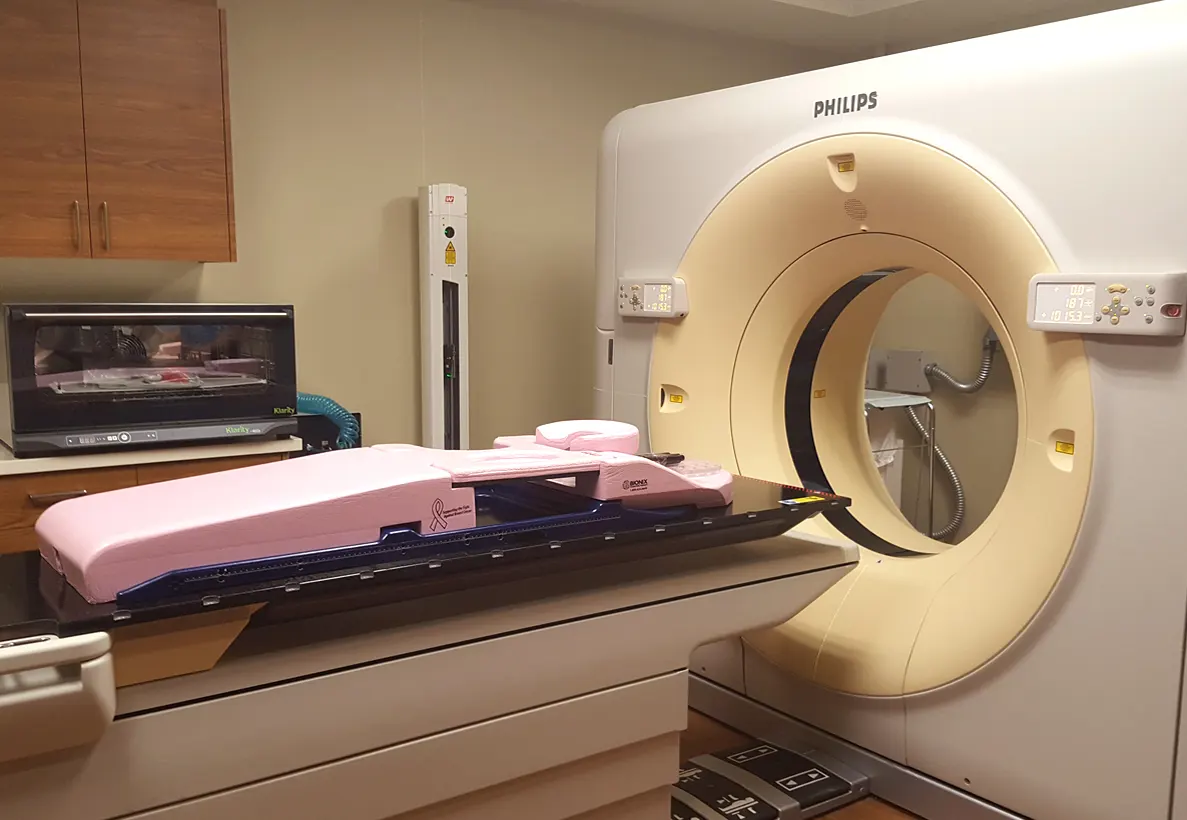
The Dr. James T. Kakuda Cancer Center at Pali Momi Medical Center is the first integrated center of its kind in the Central and West Oʻahu region, providing patients with excellent, nationally accredited care. The center provides a full spectrum of cancer services in one centralized location, allowing patients the convenience of receiving care at a single facility close to home, versus needing to visit multiple facilities or travel into town or off-island for treatment.
To better serve our patients, oncology specialists from across the Hawaiʻi Pacific Health system see their patients at the center, allowing patients access to expert care teams who specialize in their specific type of cancer from diagnosis to treatment to survivorship.
Designed with the patient experience in mind, the center incorporates state-of-the-art technology, beautiful local artwork, and soft colors and lighting to create a calm, healing environment.
The Hawaiʻi Pacific Health Cancer Center at Pali Momi Medical Center features:
- Medical oncologists and other specialists in one location for more efficient care, better outcomes and a better patient experience.
- Disease-specific navigators on site.
- Specially designed exams rooms for specific types of cancer and procedures.
- Complete infusion suite with oncology-certified nurses for treatments, hydration, blood transfusions and injections.
- Paxman scalp cooling system available during chemotherapy infusions to help prevent hair loss.
- On-site pharmacy and lab services.
- State-of-the-art conference center with space for integrated care team meetings and patient and caregiver support groups.
- Comfortable common area.
- Ample free parking.
Easy access to and from Pali Momi Medical Center.
Care at Straub Benioff
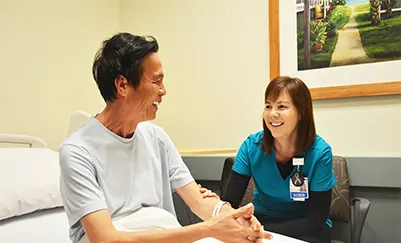
The Straub Benioff Cancer Center team consists of board-certified oncologists and specialists, oncology-certified nurses, a dedicated chemotherapy pharmacist, disease-specific patient navigators and compassionate support staff.
The Straub Benioff Cancer Center is part of the Hawaiʻi Pacific Health Integrated Network Cancer Program accredited by the Comission on Cancer and works collaboratively with the University of Hawaiʻi Cancer Center. The center features:
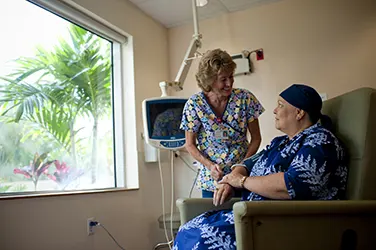
- 13 treatment bays, consisting of nine private bays and four semi-private bays. Each treatment bay has an adjustable patient recliner, personal flat-screen TV, state-of-the-art patient monitoring unit, and computer with electronic medical records capability.
- A convenient and private education room for patients and their families with a computer, internet access and American Cancer Society educational material.
- A beautiful outdoor healing garden, which is designed to provide a serene and tranquil open-air environment for patients and their families.
- A warm and inviting waiting room for patients and their family members.
- Access to clinical trials through collaboration with University of Hawaiʻi Cancer Center.
Designed and created around the special needs of patients, the Outpatient Treatment Center features a beautiful and spacious healing environment. The center provides our patients with qualified infusion care in an outpatient setting. Our professional team is dedicated to providing a personalized plan of care for each individual patient. Treatments include standard chemotherapy, biotherapy, targeted therapy and immunotherapy regimens while also providing current clinical trial therapies. The center offers convenience for patients who require frequent infusions of medications, including those with central lines.
Straub Benioff works with a diverse population of patients, such as:
- Cancer patients undergoing chemotherapy.
- Individuals taking medications for pain management.
- Patients with blood disorders such as hemophilia.
- Patients requiring intravenous antibiotics.
- Other patients who require intravenous treatments but are not hospitalized.
The Outpatient Infusion Center specializes in intravenous (IV) treatments for a variety of health conditions.
Straub Benioff Cancer Center: 808-522-4333
Care at Wilcox
Wilcox Medical Center and Kauaʻi Medical Clinic are dedicated to reducing cancer rates through advances in early detection, prevention and education.
Our team of board-certified doctors and advance practice providers evaluate and treat all types of cancer and blood disorders to allow patients access to excellent care on island, which means family and friends can support them during and after treatment. Research has found that improved quality of life during cancer treatment can increase the likelihood of long-term survival.
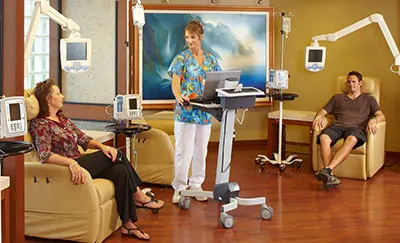
Wilcox’s Infusion Center provides high-quality care in a stress-free, healing environment. It is located at the main entrance of the medical center with plenty of parking and easy access. With 10 infusion stations and nationally certified nurses, the state-of-the-art center provides a relaxed, homelike setting with natural light and both communal and private seating.
Wilcox Medical Center is part of the Hawaiʻi Pacific Health Integrated Network Cancer Program accredited by the Commission on Cancer.
Our Cancer Care (Oncology) Locations
Oʻahu
Dr. James T. Kakuda Cancer Center at Pali Momi Medical Center Dr. James T. Kakuda Cancer Center at Pali Momi Medical Center
98-1005 Moanalua Road, Suite 3000
Aiea, HI 96701
Get directions
Details
Dr. James T. Kakuda Cancer Center at Pali Momi Medical Center
98-1005 Moanalua Road, Suite 3000
Aiea, HI 96701
Get directions
Details
Kauaʻi
Wilcox Medical Center Wilcox Medical Center
3-3420 Kūhiō Highway
Līhu‘e, HI 96766
Phone: 808-245-1100
Get directions
Details
Wilcox Medical Center
3-3420 Kūhiō Highway
Līhu‘e, HI 96766
Phone: 808-245-1100
Get directions
Details